Transactions: Grasshopper leverages FiVerity for commercial banking fraud solution
Circle selects BNY Mellon for USD Coin custodianship

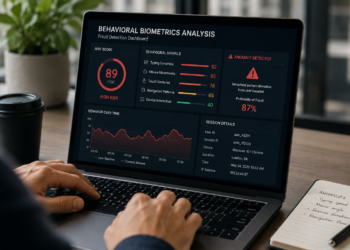
Grasshopper, a $298.9 million digital consumer bank, has selected digital fraud analytics provider FiVerity to mitigate fraud in its commercial banking originations. FiVerity uses machine learning to identify fraudsters at the origination stage.

Grasshopper President and CEO Mike Butler saw FiVerity’s “potential to move this model over into the commercial space,” FiVerityGreg Woolf, founder and CEO of FiVerity, told Bank Automation News. “It is something that we’re building up with Grasshopper because it doesn’t really exist.”
One unique feature of FiVerity is that its software is supervised and learns from analysts as well as data, Woolf said.
“Ultimately, it’s the human, the expert, that’s curating those results and essentially, we’re taking the know-how of an analyst and scaling that, as opposed to having an algorithm come up with predictions that are very difficult to verify.”
The system generates labels or the model as analysts provide feedback into the model, explained Nilabh Ohol, vice president of data strategy at FiVerity.
“What we have seen is as the model or the solutions ages and adapts to a client’s portfolio, the rate of false positive[s] declines precipitously, just because the availability of true labels and feedback from the analyst … helps in making these solutions more robust,” Ohol said.
This leads to better identification of fraudsters, who also use automation to set up fake commercial companies, Woolf said. Add to that the challenge of being purely digital, as Grasshopper is, and the problem is compounded, Butler explained.
“In the digital world, there’s a lot of fraud,” Butler told Bank Automation News. “FiVerity is a sophisticated company that has kind of been involved in the consumer side, but together, we’re going to make inroads into this small business.”
Fraud information can also be recycled into marketing data. That’s part of the value-add Butler sees FiVerity bringing to the bank as the product expands.
“That marketing data allows us to find a better client up front, rather than to have to stop and when they get in the door, and I think that’s where FiVerity is going to start to think about what’s next for them, is how this process will be a competitive advantage, because we will be finding clients in better locations,” Butler said.
Circle selects BNY Mellon as USDC custodian
Digital currencies firm Circle has selected BNY Mellon as chief custodian for its USD Coin (USDC) reserves, the companies announced last week.
The move will facilitate transaction settlements, investments and data management between digital and traditional markets, according to a release. Roman Regelman, chief executive officer of asset servicing and head of digital at the $470 billion BNY Mellon, said the growth of digital currencies presents “new and exciting opportunities.”
“Our role as a custodian for USDC reserves supports the broader marketplace and brings value to clients, founded on our role at the intersection of trust and innovation,” Regelman said.
USDC, which Circle helped launch in 2018, is linked on a 1:1 basis to the U.S. dollar and has nearly $52 billion in circulation, according to Circle’s website.
Scotiabank and Deloitte build ethical AI data tool
Scotiabank, in collaboration with Deloitte Canada, has launched Ethics Assistant, an artificial intelligence (AI)-based tool that analyzes data and provides customer insights in alignment with the bank’s data ethics framework.
The AI tool “helps us advance how we responsibly collect, share, store, and use data,” Grace Lee, senior vice president and chief data and analytics officer at the $976 billion Scotiabank, said in a release. The bank-built Ethics Assistant was developed with help from Deloitte’s AI Impact Assessment tool and will allow the bank’s future machine learning and AI projects to originate from an ethical data background, according to the bank.