RTPs, real-time data may boost banks’ capital, cash management
Euro Banking Association released its "Use of Real-time Data" report on Dec. 1

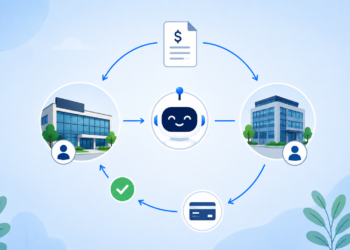
Banks that focus on aligning real-time payment (RTP) transactions and real-time data may be able to help their corporate clients boost working capital and improve cash management.

Financial institutions must ensure that necessary processes and technologies like open APIs have been properly implemented to deliver real-time data for clients — or risk that new entrants to the market will, according to the Euro Banking Association’s (EBA) ”Use of Real-time Data” report released Dec. 1. The report details six case studies from the EBA’s Liquidity Management Working Group (LMWG).
ISO 20022 delays
The potential constraints on banks include migration delays of ISO 20022 — an open global standard for sending digital payment messages and data between financial institutions.
SWIFT announced in October that its cross-border payments and reporting plus (CBPR+) project is now delayed until 2023 so that it can better align with the European Central Bank’s (ECB) delayed TARGET2 real-time gross settlement (RTGS) migration set for March 2023.
Payments Canada also announced that its new high-value payments system, Lynx, would not activate the ISO 20022 element of its technology platform until March.
Meanwhile, the U.K.’s revised April 2023 timeline for its Clearing House Automated Payment System (CHAPS) RTGS upgrade may also be delayed, as is its ISO 20022 migration package for the overhaul of its retail payment infrastructure.
“As part of the ISO 20022 migration and the introduction of instant payments, banks across Europe have invested significant resources into infrastructure that enables the delivery of real-time data and payment processing to their corporate clients,” Krister Billing, chairman of the LMWG, said in a release.
“To optimally support their corporate customers and further monetize their investments, banks must now develop a clearer understanding of how this real-time data can best be used by customers to manage liquidity and to support business decision-making more generally,” he said.
Global standard
The ISO 20022 delays are frustrating banks and their clients, who have been working on internal messaging migrations for years in order to take advantage of the extra character space and data-carrying possibilities that the improved messaging standard offers, according to the report.
An ISO 20022-enabled world would provide a global standard for enhanced electronic data interchange across cash, securities, trade, card and foreign exchange (FX) transactions, based on a shared data dictionary and business processes, according to the report.
Big data benefits
The benefits of ISO 20022, RTPs and real-time data are compounded by the simultaneous rise of real-time, unstructured big data sources from social media and market data sentiment mining.
ISO 20022-enabled payment infrastructures, RTGSs and tech-savvy banks could charge corporations more for data than for the transaction itself, making liquidity management even more valuable, according to the report.
The technology will allow payments and other data to connect in a single transaction in real time with no conversion tools, delays or cross-border fees, according to the report, with benefits including:
- Enhanced cross-border payments functionality;
- Billing visibility and tracking for corporations;
- Streamlined reconciliations;
- Operational efficiencies in payment and liquidity procedures; and
- Improved data insights.
Bank Automation Summit US 2023, taking place March 2-3 in Charlotte, is a crucial event on automation and automation technology in banking. Learn more and register for Bank Automation Summit US 2023.